These past few weeks had been rough in our household. Both of my daughters had trouble channeling their emotions in the correct way. They get irritated and triggered easily. To be honest, There were days where I lose my cool Allahul Mustaan. But as the days go by, things are getting better and a lot calmer. Here I will share a few important points that I took to manage our household.
Finding the root cause.
Toddlers are impulsive which means they cannot control themselves . So when they are angry or frustrated, they would just burst. I mentioned before that a part of a child’s brain which control his impulsiveness has not fully developed and is under construction until he is in his early 20s. Thus they find it difficult to reason out their actions. They tend to act emotionally.
So if a child misbehaves, it is most certainly they feel threatened by something and could not express it to adults.
In my case, the major reason for the misbehaviour is their sleeping pattern which changed during Ramadhan. Ramadhan during summer in Saudi Arabia would mean longer day times and since it is Ramadhan, no one sleeps after taraweeh. Daily lives begin after ‘Asar . Bustling activities starts after taraweeh right until fajar. Its normal to do your grocery after midnight. No shops were opened until zuhur. Even office hours are pushed back from 10am to 2pm only.
Ramadhan in Saudi is very “alive” in the sense that people maximise their time doing ibadah yet it distrupt our sleeping patern. Adults can easily adapt but kids (mine especially) struggle with it. Post ramadhan, they would only wake up after Asar. This means that they are so refreshed all the way past their pre ramadhan bedtime.
A change in sleeping times mean major emotional turbulence for the kids.
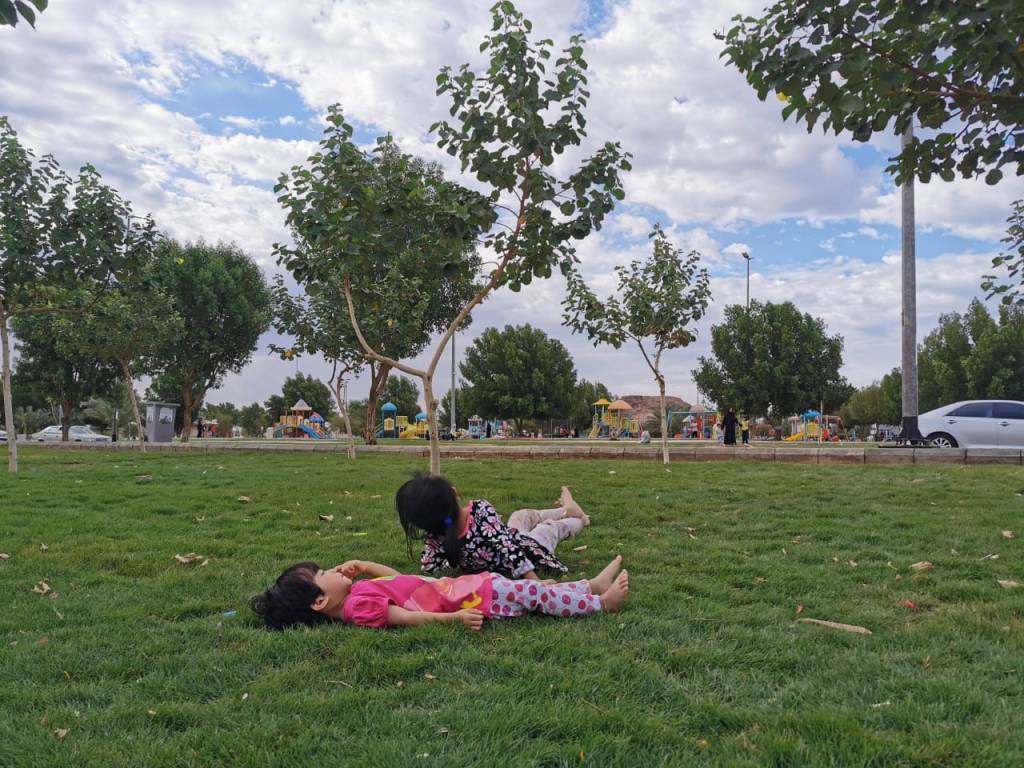
Another major reason for this instability of emotion is the lack of outdoor activities. I always believed that outdoor play is very important for children’s mental and health beings. Being outdoor -in nature- just ignites all the senses in our children. They can see smell hear and touch the environment outdoor. They can run free. This is a channel for them to release all of their feelings/thoughts safely.
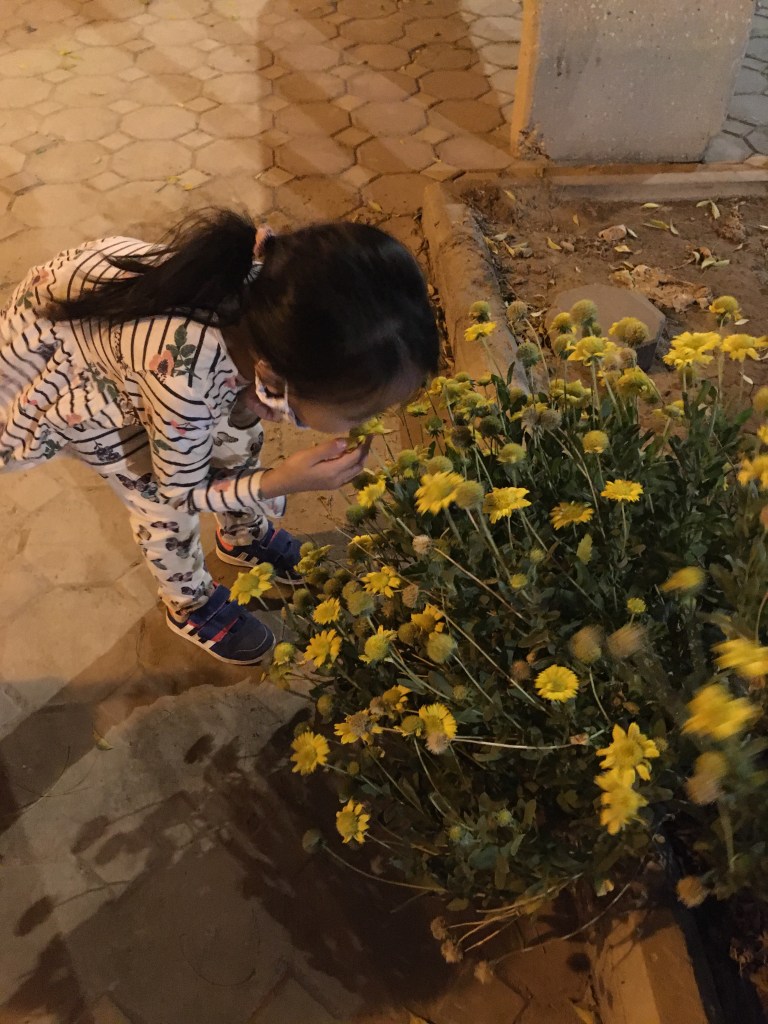
Research shows that children who play outside are more happier, more focused,more attentive and less anxious than children who spend their days indoor.
In my case, I believe that lack of outdoor activities due to the pandemic and extreme hot weather during this summer in Saudi contribute to my children being emotionally drained.
So how do we do it?
Connect before correct.
If you want your child to cooperate, you need to connect first. The more the kids feel connected to you, the easier they will cooperate with you.
Connecting with your child means offering safety and a sense of “openness”. While punishment or scolding can lead to more power struggles and create fight, flight or freeze.
Connecting means you are telling your children “I know what you are feeling and I am here to help you”
So how do we connect with our children? We connect with rahmah- being merciful to them. And what better example than our beloved prophet Muhammad PBUH.
Rasulullah PBUH as our role model.
Prophet Muhammad PBUH was gentle and loving to others especially children. Have you heard about the story where Rasulullah PBUH kissed his grandchild Hasan RA when he came to him PBUH?
“Rasulullah PBUH kissed his grandson Hasan when a man named Al-Aqra was sitting with him. Al-Aqra said, “I have ten children and have never kissed one of them.” The Prophet looked at him and said, “Whoever is not merciful to others will not be treated mercifully.” (Al-Bukhari)
Be emphatic.
Parenting expert Dr. William Sears cites numerous studies that show that the two most important enhancers of a child’s brain development are the quality of the parent-child attachment, and the response of the caregiver to the child’s emotions.
So during the emotional outbursts of our child, how we react/our response matters.
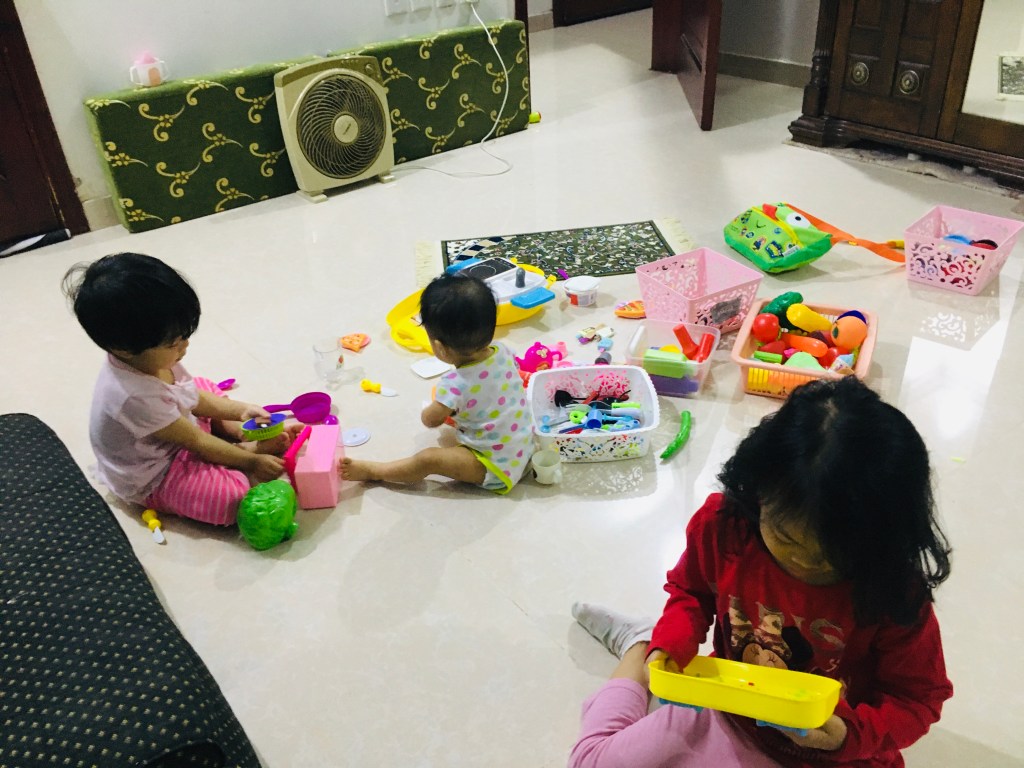
Try this: the next time your child comes to you complaining that her younger sister does not want to share her toys, instead of you shushing her off or tell her to let the matter go and give in, be emphatic and validate their feelings.
Go down to their level, hold their hands and look into their eyes and empathise by saying “you really want that toy isn’t? You feel sad that your sister wants the same toy that you are holding? Hmm I wonder what we can do”
You can offer suggestions on what they can do and wait for them to figure out themselves.
One major benefits of being an emphatic parents is that not only you try to help improve your relationship with your child, the child himself learns that he is loved and cared for and thus easier for him to “set boundaries and solve problems”.
A point to note, in order to empathise to our children, we as parents must learn first how to be self emphatic on ourselves. This means giving own selves breaks when things get a bit too much. You listen to your own feelings and be aware of it. You find ways to cope and manage your emotions. And I believe self empathy can be mold by improving our relationship with our Creator. Reading Quran, reciting the Azkar, doing Nawafil – all these help you become more calm and composed. Filling your child’s cup is much easier this way when your emotional cup had been filled with all this goodness.

Be calm.
Author of gentle parenting books, Dr Laura Markham said that : “your number one job as a parent after assuring the safety of your children is to manage your own emotions”
Trust me, I struggle a lot with this! Subhanallah. When my child gets cranky or they are fighting over something, i really try to stay calm. I try not to let their squabbles get to me . It takes a lot of practice and effort on my side to remain calm and collected whenever the kids are having a hard time managing their emotions. There are days when I succeeded and there are days where I believed that my emotions get the better of me and my neighbours can even hear my yelling.
But one thing’s sure, your kids would never listened to you when you are yelling. Emotional outbourst from them and emotional reaction from you, are not going to help anyone in the household. So the key is to seek refuge with Allah from syaitaan and take deep breaths before any actions.
Rasulullah PBUH never acted out of anger or harshness- not to any adults nor children even.
Abu Hurairah said: “A Bedouin entered the mosque when the Messenger of Allah (peace and blessings be upon him) was sitting there, and (the man) said: ‘O Allah, forgive me and Muhammad, and do not forgive anyone else with us.’ The Messenger of Allah smiled and said: ‘You have placed restrictions on something that is vast.’ Then the Bedouin turned away, went to a corner of the mosque, spread his legs and began to urinate. After he had a better understanding, the Bedouin said: ‘He (peace and blessings be upon him) got up and came to me, and may my father and mother be ransomed for him, he did not rebuke me nor revile me. He (peace and blessings be upon him) said: “This mosque is not for urinating in. Rather it is built for the remembrance of Allah and prayer.’” Then he (peace and blessings be upon him) called for a large vessel of water and poured it over the place where I had urinated.” (Sunan Ibn Majah)
Subhanallah! What a beautiful character shalallahu alaihi wasaalam! Now do you remember the time when you are toilet training your toddler? Do you remember how many times you lose control of the situation when the kid accidentally urinates on the floor? Compare that situation with how Rasulullah PBUH reacted back then.
Speak slowly and instruct with clear and concise sentences.
Abu Abdullah Al-Khadali reported: I asked Aisha about the character of the Messenger of Allah, peace and blessings be upon him. Aisha said, “The Prophet was not indecent, he was not obscene, he would not shout in the markets, and he would not respond to an evil deed with an evil deed, but rather he would pardon and overlook.” (Tirmidhi)
Anas ibn Malik reported: I served the Prophet, peace and blessings be upon him, for ten years. By Allah, he never even said to me, “Uff!” He never said harshly for anything, “Why did you do that?” or, “Why did you not do that?” (Bukhari and Muslim)
The greatest man ever walked on earth, Rasulullah PBUH speaks with a quiet voice, he never shouts. So why, we as his ummah,would resort to shouting when our children makes mistakes?
The Quran also mentioned in surah Luqman about how we need to lower down our voice.
And be moderate in your pace and lower your voice; indeed, the most disagreeable of sounds is the voice of donkeys. (Quran, Luqman 31:19)
I am not going to sugarcoat this sharing by saying that I never shout at my children. I shouted before and I am pretty sure I am going to shout again in the future. I am far from perfect. But I hope this sharing would at least motivates me personally to always try to be better for my children.
Shouting can be seen as the easiest and fastest way to attract your kids attention. They made a mistake, you shout at them. They got scared and they grudgingly follow your instruction. End of story. Right? Nope! It may quiet them and make them obedient for a short while but it won’t make them correct their attitudes or behaviour.
Shouting teaches your kids to fear you instead of them understanding the consequences of their actions.
Shouting makes children feel insecure and anxious,they feel more aggressive while calmness makes the children feel loved and accepted even if they misbehave
Another point to add, whenever Rasulullah PBUH gives out instructions, he would give it in a clear way. Short and concise.
Umar ibn Abu Salamah reported: I was under the care of the Messenger of Allah, peace and blessings be upon him, and my hand used to roam about the dish. The Prophet said to me, “O young man, mention the name of Allah, eat with your right hand, and eat what it is front of you.” (Bukhari and Muslim)
From this hadith we can derive that Rasulullah did not scold the sahabah for his mistakes, instead he PBUH focuses on what is the correct way – with clear & short sentences.
I am trying to implement this in our household too. For example, Marya always forget to hang her clothes after use. So whenever she wants to change clothes, I’ll give her a few minutes (without reminding) to see if she remembers to pick it up from the floor. After a few minutes she might pick it up. At times when she needs a reminder, I will save my energy from yelling by just tapping her on her shoulder and say “ you forgot something” she will realise soon after. If not i will change my words by saying “marya, you need to hang this pants here” and show her where- a direct and specific instruction.
Kids need constant reminder. That’s how they work things out. Be patient. We were once young too.
Acknowledge good behaviour.
When we acknowledge positive behaviour, it is most likely to repeated. They will be encouraged to do good when they are noticed. So the cycle will continue inshaAllah.
Conclusion.
Gary Chapman, author of the book The Five Love Languages, and he quoted a psychiatrist named Dr. Ross Campbell. “Inside every child is an ‘emotional tank’ waiting to be filled with love. When a child really feels loved, he will develop normally, but when the love tank is empty, the child will misbehave. Much of the misbehavior of children is motivated by the cravings of an empty ‘love tank.’”
It takes a lot of time and effort from our side as parents to take charge of our household positively. On days where you reacted unaccordingly, know that Allah will always help you and that you will always have the time and space to improve. Better days ahead ummis!
I pray that Allah guides and eases our journey to be a better parent for our children inshaAllah.
 Raising muslim kidlets