
“Self-confidence is the foundation of all great success and achievement.” Brian Tracy (author of many self-development books).
Confident kids with positive self-esteem value their own selves. They know that they are capable of doing stuffs on their own and always try their best to achieve anything they set their mind into.
When kids are confident, they are more likely to have growth mindset- meaning they can motivate themselves to try new challenges, accept mistakes and learn from it.
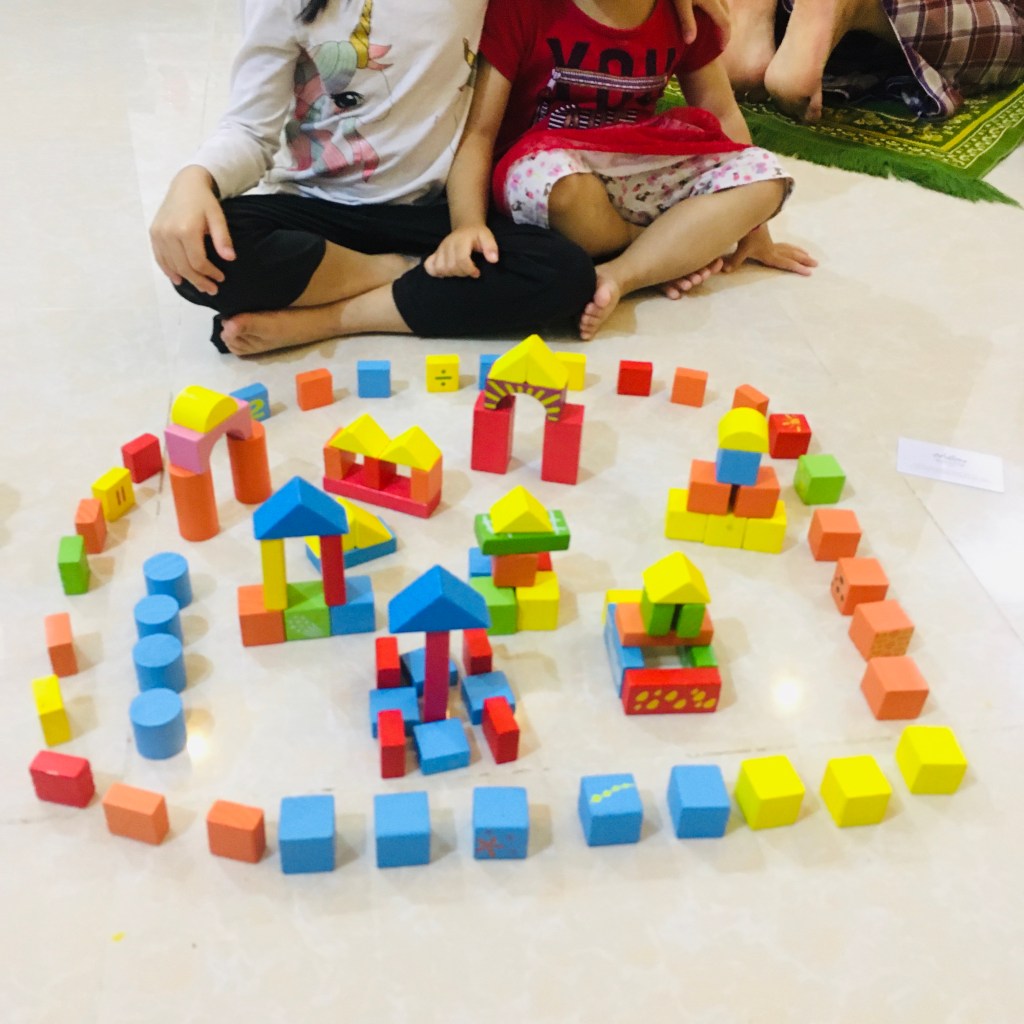
Being self-confident does not mean thinking that the world revolves around you. You can build your child’s confidence and at the same time balance it with empathy, having good manners and being grateful with his surroundings.
Self-confidence is an acquired characteristic, and the Muslim needs help and support from Allah. The more he puts his trust in Allah, the greater his self-confidence will grow and reach the highest level.
When prophet Musa (alaihi salam) and his people fled from Pharaoh and his troops, and the two sides saw one another, we see the trust that Musa had in his Lord. Allah says:
“And when the two hosts saw each other, the companions of Musa said: ‘We are sure to be overtaken.’ Musa said: ‘Nay, verily, with me is my Lord. He will guide me’”
[al-Shu‘ara’ 26:61, 62].
So here are 5 tips to build your child’s confidence.
- Be their guide and learn together.
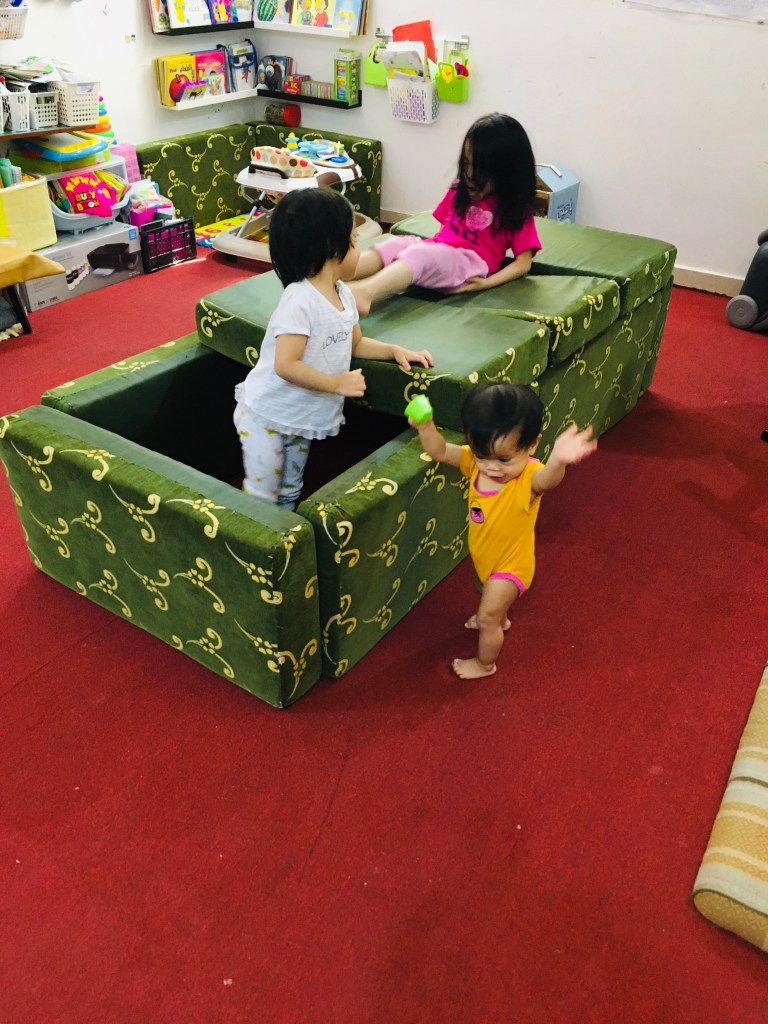
When introducing new stuffs to your child, instead of shoving him/her into the unknown, be there as a guide for them. Learn and grow together as a team.
Example : When you want your child to memorise the Quran, start your hifz journey too!
Similarly, if you wish that your child will learn a new language, he will only absorb and immerse the language in his daily life if you are willing to take his hand and learn together.
2. Give age-appropriate tasks.
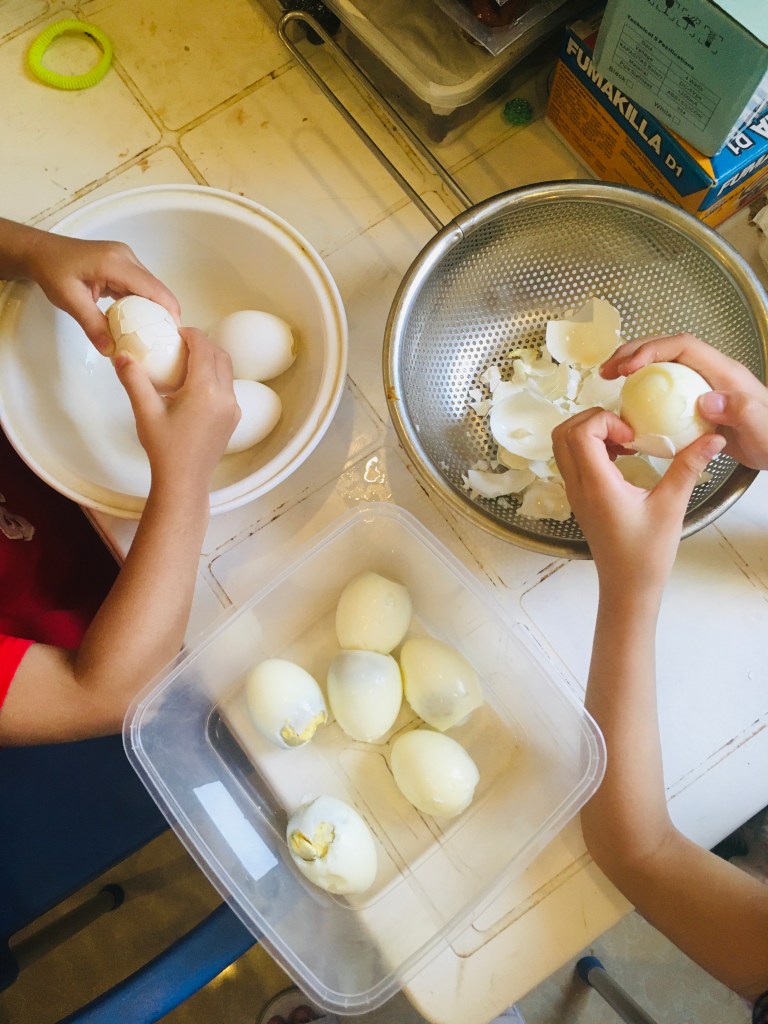
When you involve your child in daily household chores, it makes them feel included. Choose something that they can do by themselves confidently.
Example: Folding clothes. Your closet would never look Marie Kondo-ish but at least it teaches your child to be responsible and independent human.
Other simple examples would be: Letting them choose what clothes to wear daily. Making their own snacks. Helping you do grocery. Set the table during meal times. Water the plants and many more!
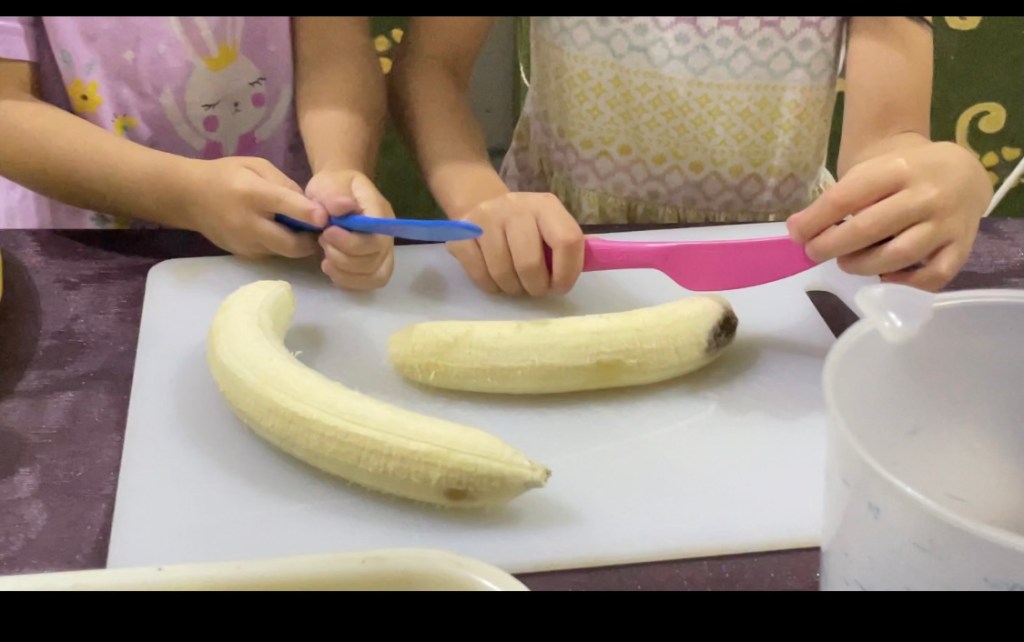
And do you know how Rasulullah (Peace be upon him) chose some of the young companions, placed his trust in them and invested in their youth to contribute something for Islam?
Despite their young age,Rasulullah (Peace be upon him) did not hesitate to assign them important roles. This makes the companions feel confident and special because of the trust that Rasulullah (Peace be upon him) have on them.
Entrusted to learn a new language:
Zayd bin Thabit was 13 years old when he went to Rasulullah (peace be upon him) to ask permission from Rasulullah (peace be upon him) for him to join the battle of Badr.
But Rasulullah (peace be upon him) did not grant his wish but instead instructed him to learn the hebrew language.
Rasulullah (peace be upon him) knew that Zayd had a sharp mind and a huge interest in knowledge- and so Zayd (RadiyaAllahu ‘anhu) learnt the language of the jews at that time and the syriac language and eventually served as a translator and scribe for the prophet.
During the time of Abu Bakar(RadiyaAllah ‘anhu), Zayd bin Thabit was chosen to lead the project of compilling the Quran in a book form.
Muadz bin Jabal (RadiyaAllah ‘anhu) was only 27 when he was appointed as the governor of Yaman. And during “fath-makkah” (conquest of Makah) he was chosen as the deputy of Rasulullah (peace be upon him).
Usamah bin Zaid was only 17 when he was chosen to lead the Muslim army. And behind him stood the greatest companions such as Abu Bakar and ‘Umar (RadiyaAllahu ‘anhuma)
After the pledge of Aqabah, Mus’ab bin ‘Umair a young man, was sent to yathrib (madinah) to be the first muslim ‘ambassador’ to teach the people about Islam.
Prophet Muhammad ( peace be upon him) was able to see the best in young people and hoped for a brighter future for them.
So to think, if we could only let our children do simple tasks from a young age, as they grow older, they will feel more empowered and confident to take up new tasks and face new and more difficult challenges. InshaAllah
3. Acknowledge their effort.

In Montessori, it is normal for parents/ guide to acknowledge what the child is doing rather than praising or offering rewards.
For example, a child who is trying to help set the table for the first time. His parents/ guide might have demonstrated on how to do it beforehand. However during the process of the child doing it, in order for him to focus on his effort, we try not to interrupt or give comments on what is going on.
But when he is done with his job, we acknowledge their effort by saying something like “you managed to set the table by yourself” or “I see you have placed the cup/bowl by the side”
Comments such as “ I can see you are very happy and proud of your work” “that was really helpful of you to help set the table” “thank you for helping” – these remarks are all acknowledging what the child accomplished rather than merely praising the child’s or offering rewards.
Acknowledgement helps children assess their work, they will feel more confident and proud of what they have achieved. The more specific our comments , the more easier for them to be able to better improve whatever they are doing.
(Read the next point to know more on why we should praise the effort more rather than the result )
4. Praise the effort not the result.
A renowned psychologist Carol Dweck wrote in her book “mindset” : people either have a fixed or a growth mindset, and the one that you adopt can affect every aspect of your life

Fixed mindset means that you believed that your skills and intelligence are fixed and cannot be developed. You have the constant fear of failure and hate challenges.
Growth mindset on the other hand is when you think your talents can be further honed with practice and preserverance.
So what does this got to do with building a child’s confidence?
A child with a growth mindset is not afraid of failure, he is willing to try and explore new stuffs.
When the child with a growth mindsets sees that his effort is noticed, even if the work is not “perfect”, he knows that can learn and do anything he put his mind into.
And in order for a child to have this mindset, he needs the support of his parents of course! His upbringing matters.
Praising your child’s effort encourages perseverance in them. Making them more resilient and be more confident when faced with new challenges.
Read more on Dweck’s study : “praise for effort not intelligence” here: http://mereworth.kent.sch.uk/wp-content/uploads/2015/04/growth_mindsets_dweck-praise-effort.pdf
5. Do not look down on the result.
Parents always want the best for their children. But setting realistic expectation is important.
Too high of an expectation? The child will feel demoralised when his effort is not as what he hoped for.
No expectation? The child will feel demotivated and not willing to try.
So finding a balance is essential to ensure that the child enjoys the learning progress more rather than focusing on the end result.
The more the child enjoys learning, the more he is driven to explore. This in turn helps boost his motivation and confidence.
Also it is equally important to encourage children when they have failed and not only when they have succeeded.
So that’s the 5 tips on how to boost your child’s confidence! Share your thoughts with us on the comment box below.
Happy parenting!
 Raising muslim kidlets